Duelists at the Poker Table: Stories of Legendary Psychological Clashes
The history of professional poker includes moments when the outcome of a hand depended not on cards alone, but on psychological pressure, self-control and the ability to read an opponent’s intentions. Across decades of high-stakes tournaments, players have faced rivals whose strategic mindset and mental resilience shaped iconic confrontations. These duels became case studies for analysts, shaping the modern understanding of behaviour, pressure and long-term decision-making at the table.
The Mental Dynamics Behind Iconic Poker Confrontations
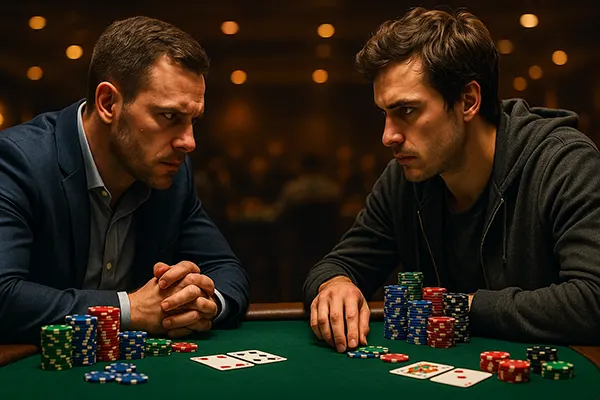
Psychological clashes in poker often emerge when elite players recognise each other’s strengths and refuse to concede informational ground. One of the most studied examples is the rivalry between Phil Ivey and Tom Dwan in deep-stack cash games, where both relied on balanced ranges, controlled aggression and strategic unpredictability. Their confrontations highlighted how posture, bet timing and emotional neutrality could shift the momentum without a single word spoken.
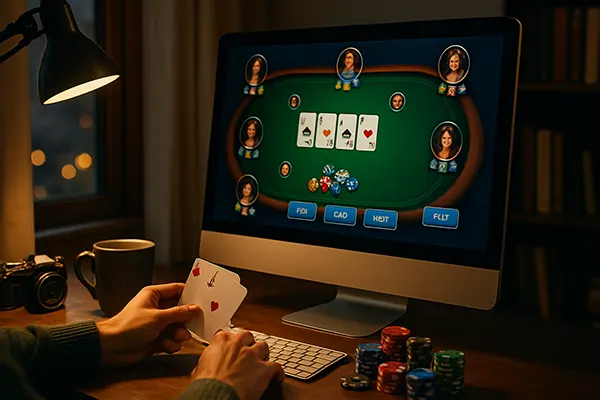
Another well-documented case is the tension between Patrik Antonius and Viktor Blom during the online high-stakes boom of the 2010s. Despite occurring in virtual rooms, these battles showcased the same psychological depth found in televised tournaments. Their ability to maintain consistent decision-making under extreme financial pressure remains a reference point for mental training programmes used by professionals in 2025.
Furthermore, the rivalry between Daniel Negreanu and Doug Polk remains one of the clearest demonstrations of how preparation and mindset can redefine a match. Their extended heads-up series illustrated how data-driven analysis combined with psychological discipline helped Polk counter Negreanu’s traditionally conversational and adaptive approach.
How Psychological Pressure Shapes Strategic Choices
Poker duels often hinge on subtle behavioural cues that influence the decision-making process. Players who excel at maintaining consistent patterns force opponents into guessing rather than reacting, creating prolonged uncertainty. This uncertainty increases cognitive load and can lead to errors even among top-tier professionals.
Another factor is the management of expectation during long sessions. Experienced players use controlled pacing to influence the rhythm of the game, adjusting the atmosphere to their advantage. This creates a form of strategic fatigue, where opponents gradually become more susceptible to bluff-inducing lines or value-heavy traps.
Finally, psychological dominance can develop through repeated small victories in marginal spots. Winning several minor pots in succession builds narrative pressure, prompting competitors to question their own reads. This form of cumulative mental impact has been demonstrated numerous times in televised events and continues to be analysed by coaching teams as of 2025.
When Rivalries Become Turning Points in Poker History
Some clashes go beyond individual hands and influence the evolution of the entire discipline. The long-standing rivalry between Johnny Chan and Erik Seidel in the late 1980s, highlighted by their clash at the 1988 World Series of Poker Main Event, remains symbolic. The iconic moment when Seidel folded to Chan’s quiet confidence demonstrated how non-verbal communication can be as decisive as mathematical reasoning.
In more recent years, the competitive tension between Fedor Holz and Stephen Chidwick showcased a new era of analytical precision. Both players, known for structured study methods and mental endurance, often approached each other with extreme caution. Their confrontations demonstrated how psychological preparation intertwines with probability-based decision-making in the modern game.
An additional example is the ongoing dynamic between Maria Ho and Kristen Foxen, two players who have consistently displayed exceptional reading ability and emotional control. Their interactions in major tournaments illustrate how respectful rivalry can push competitors to refine their strategies, elevating performance across the field.
The Influence of Personality on Rivalries
Personality plays a central role in how psychological clashes unfold. Calm, analytical players often use silence and minimal movement to limit informational leaks. This approach forces opponents to rely solely on betting patterns and timing, increasing the complexity of reads.
Conversely, socially expressive players incorporate conversation as a strategic device. By guiding table talk, they attempt to shape emotional conditions and encourage opponents to share unintended cues. Although controlled interaction can be effective, it requires discipline to avoid revealing personal tendencies.
In addition, long-term familiarity between opponents can solidify rivalry into a form of intellectual competition. When players meet repeatedly across seasons, they internalise each other’s habits and emotional patterns, transforming every new match into a test of adaptation and psychological evolution.
How Poker Psychology Continues to Evolve in 2025
Advancements in behavioural research and cognitive science have influenced modern poker preparation. Many professionals rely on mental coaching to manage stress responses and sustain high-level concentration during extended sessions. These programmes integrate breathing techniques, scenario simulation and decision-mapping to improve consistency under pressure.
Artificial intelligence tools also contribute to the modern understanding of psychological tendencies. Although AI cannot replicate emotional states, its analysis of pattern deviations helps players identify when mental fatigue or stress may influence their decisions. By 2025, this combination of technology and psychology has become a standard component of elite training.
Moreover, live tournament environments have become more competitive, prompting players to focus on posture, eye movement and micro-expressions. Analysts highlight that even minimal changes in behaviour can indicate shifts in emotional stability. As a result, modern duels feature sophisticated interplay between observation, restraint and strategic execution.
What Defines Successful Psychological Strategy in Today’s Game
Effective mental strategy relies on preparation rather than improvisation. Players with well-developed routines approach sessions with stable emotional baselines, significantly reducing the likelihood of impulsive decisions. This foundation allows them to maintain clarity throughout complex scenarios.
Another component is the ability to adjust behavioural patterns without compromising strategic integrity. Professionals recognised for their versatility can alter pace, presence or conversational approach to modify the psychological landscape of the table.
Finally, successful players combine emotional resilience with transparent long-term planning. They understand that psychological clashes are not isolated events but components of broader competitive cycles. This perspective enables them to navigate pressure while sustaining a data-informed and mentally disciplined style across tournaments.