
The Role of Blockers in Modern Poker: Practical Examples
In modern poker, decision-making is increasingly based on range analysis rather than on guessing individual hands. One of the most important concepts within this approach is the idea of blockers. Blockers influence how likely an opponent is to hold specific combinations, directly affecting betting, bluffing, and value decisions. By 2025, this concept is firmly embedded in both live and online strategy.
Understanding What Blockers Are in Poker
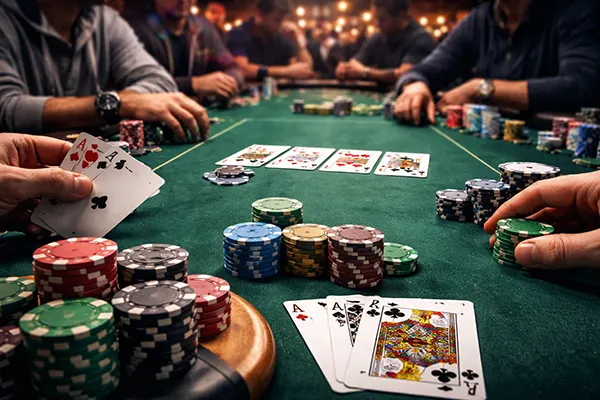
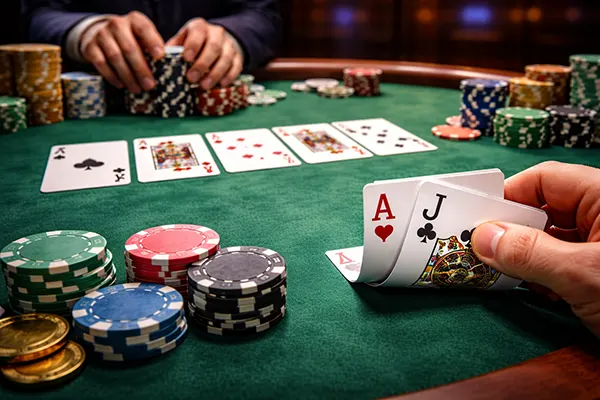
A blocker is a card in your hand that reduces the number of possible combinations your opponent can hold. This effect is purely mathematical and does not rely on psychological reads. For example, holding the ace of spades lowers the chance that your opponent has a nut flush in spades.
Blockers are especially relevant in no-limit hold’em, where hand ranges contain many possible combinations. By removing certain key cards from the deck, your hand reshapes the opponent’s realistic range, often making strong hands less likely and weak hands more plausible.
In practical play, blockers are most influential in spots involving large bets, river decisions, and situations where ranges narrow significantly. These are moments when even small changes in combination counts can justify aggressive or defensive actions.
Card Removal and Combination Mathematics
The mathematical foundation of blockers lies in combination counting. Each unseen hand your opponent may hold is based on remaining cards in the deck. When you hold one of those cards, the total number of available combinations decreases.
For instance, if the board contains two hearts and you hold the ace of hearts, the number of possible heart flush combinations your opponent can have drops sharply. This changes the risk profile of betting or calling in a meaningful way.
Strong players routinely internalise these calculations without explicit counting. Through experience, they recognise when their cards significantly weaken an opponent’s value range and adjust their strategy accordingly.
Using Blockers in Bluffing Scenarios
Blockers are most visible in bluffing situations, particularly on the river. A well-chosen bluff often relies on holding cards that block an opponent’s strongest possible hands, making it harder for them to justify a call.
For example, bluffing on a completed straight or flush board is more credible when you hold a key card from that draw. Even if you missed, your hand represents strength more convincingly due to reduced value combinations on the opponent’s side.
Modern solver-based strategies frequently recommend bluffing with specific blocker hands rather than random holdings. This ensures that bluffs are grounded in logical range construction rather than intuition alone.
River Bluffs with Nut Blockers
Nut blockers are cards that block the strongest possible hand on a given board. Holding the ace in a potential flush or the highest card in a straight sequence is a classic example.
When you hold such a card, your opponent is far less likely to have the nuts, which increases the profitability of a large bet. This applies even if your own hand has little showdown value.
In practice, effective river bluffs often combine nut blockers with hands that have no realistic chance of winning if checked. This creates a balanced strategy where bluffs and value bets share similar betting patterns.
Blockers in Value Betting and Defence
Blockers are not only useful for bluffing; they also play a role in value betting and defensive decisions. Holding certain cards can reduce the likelihood that your opponent can beat you, making thinner value bets viable.
For instance, if you hold a king on a paired board, it becomes less likely that your opponent has trips or a full house involving that rank. This can justify betting hands that would otherwise check.
Defensively, blockers help identify when calling is safer than it appears. If your hand blocks several strong combinations, the opponent’s range may be weighted more towards bluffs.
Blockers in Call or Fold Decisions
When facing a large bet, many players focus solely on their own hand strength. Advanced players also consider which hands they block and which hands they unblock.
If your holding blocks missed draws but does not block value hands, calling becomes less attractive. Conversely, blocking key value combinations while leaving bluffs intact improves the expected value of a call.
By 2025, this type of reasoning is standard among experienced players, especially those accustomed to analysing solver outputs and hand histories in depth.